
Top Software Tools Used by Professional Animators in 2026
June 15, 2026
Top Animation Software Tools for Professionals 2026
Discover the best animation software tools used by professionals in 2026, including Maya, Blender, After Effects, and more for 2D, 3D, and VFX.
Animators continue to improve at a rapid rate, and 2023 is proving to be an exciting moment for creative individuals. Animation is a key aspect of all types of modern digital storytelling—blockbuster movies; television shows; video games; advertising; and social media content. As a result of the increasing need for quality animated products, the animator relies on various software programs to create their animation quickly and easily, while remaining creative.
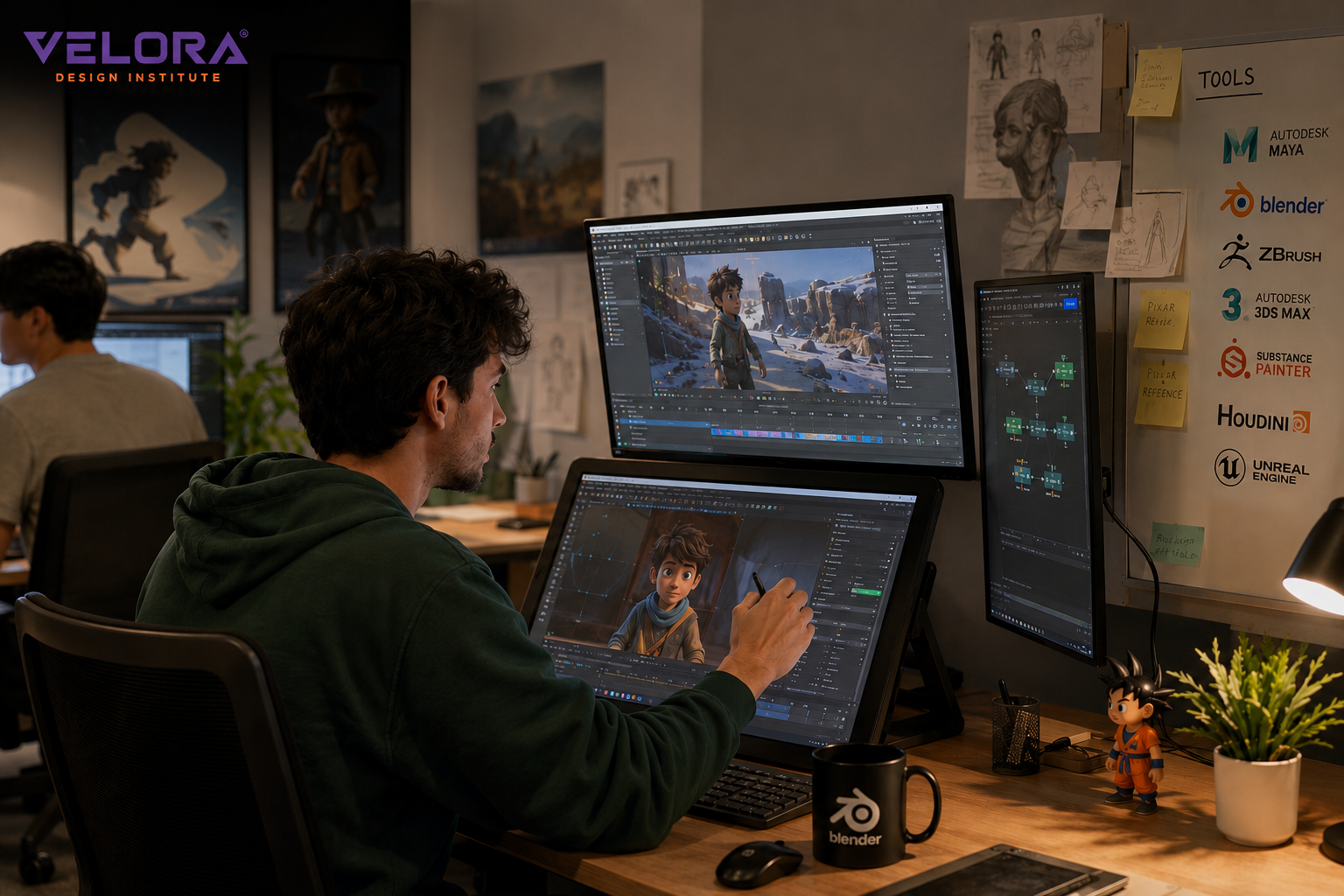
If you are looking to be a 2D animator, a 3D artist, a motion graphics artist or a visual effects artist, it is important that you know what animation software tools are used by professional animators today. As more and more animation software tools become available, this guide will review some of the most frequently used software programs for professional animators and why each of these programs continues to be a favourite in the industry.
Why Animation Software Matters
In addition to creativity, animation quality relies upon the tools utilized in producing animation. Artists now have access to modern animation software which can produce realistic motion, detailed characters, immersive environments, and amazing visual effects..
Many of the professional animation tools include:
- Character Rigging
- Motion Tracking
- Visual Effects Integration
- 2D and 3D Animation Workflows
- Rendering and Compositing
- Real-Time Previews
- Collaborative Production Pipelines
By selecting an appropriate animation software, productivity and creative output will increase greatly.
1. Autodesk Maya
Maya is still one of the most internationally used animated 3D software. Large film studios, game companies, and animation production houses, large and small, continue to rely upon Maya for their grand-scale projects.
Key Features:
- Advanced character rigging
- High-quality 3D modeling
- Realistic animation tools
- Powerful rendering capabilities
- Simulation and Visual effects integration
Maya is used in feature films, video games, and television animation because of its versatility and professional-grade functionality.
Best For:
- 3D animators
- Film production
- Game development
- Visual effects residential
2. Blender
Blender is one of the most widely used animation software programs because of its many capabilities, and it's free to use! Blender attracts both professional animators and people who create animation independently in 2026.
Key Features:
- 3D modeling and sculpting
- Character animation
- Motion tracking
- Rendering engine
- Video editing tools
Blender has a large community and receives regular updates, making it one of the best programs available for aspiring and professional animators.
Best For:
- Freelancers
- Independent studios
- Students
- 3D animation projects
3. Adobe After Effects
Adobe After Effects is still the most widely used software for creating motion graphics by a wide margin. After Effects is commonly used to create motion graphics for animated titles, visual effects, advertisements and social media content.
Key Features:
- Motion graphics creation
- Visual effects production
- Text animation
- Video compositing
- Integration with Adobe Creative Cloud
Because of the features listed above, After Effects is great for content creators and marketers who need visually stimulating animated content.
Best For:
- Motion designers
- Video editors
- Digital marketers
- Content creators
4. Toon Boom Harmony
Toon Boom Harmony continues to be the leader in professional-level 2D animation software for the animation industry.
Harmony is commonly used to produce many well-known animated television series and feature films because of its extensive drawing and animation features.
Key Features:
- Frame-by-frame animation
- Rig-based animation
- Advanced drawing tools
- Camera controls
- Effects and compositing
Best For:
- Cartoons
- Animation for television
- Animation production based on traditional processes
- 2D animation studios
5. Cinema 4D
Based on its interface, Cinema 4D has established itself as a go-to solution for designers working in animation, advertising, and television.
Key Features:
- It includes an intuitive user interface
- and includes additional features such as:
- vector graphics & video
- advanced 3D modelling
- creating realistic-looking images
- integrating video/graphic media
This makes it particularly appealing to anyone working against time constraints.
Best For:
- Audience for Cinema 4D
- motion graphics designers
- advertising agencies
- television graphics designers
- 3D visualisation projects.
6. Houdini
Houdini is well-known among its users for producing high-quality procedural animations and visual effect productions on an unprecedented scale. Many of the largest studios in Hollywood also rely heavily on Houdini for creating the largest and most complex simulation effects in the film industry.
Key Features:
- the ability to use procedural workflows;
- the ability to create particle-based simulations;
- fluid dynamics simulations;
- destruction simulation and effects;
- crowdsimulation.
Although the learning curve is steeper than Cinema 4D, Houdini offers creative artists the ability to develop high-quality creative effects using advanced techniques.
Best For:
- VFX artist
- film production
- complex simulations & effects
- technical animation
7. Unreal Engine
Game Developers developed Unreal Engine primarily to generate video game content, but have made significant strides in developing high-quality animations and virtual productions since the beginning of 2010.
Their real-time rendering technology has enabled animators to generate real-time animations without having to wait for lengthy rendering times.
Key Features:
- real-time rendering
- virtual production tools
- Cinematic animations workflows
- High-Quality Output of Media Content
- Interactive Content Ingredient Tools
- Audience for Unreal Engine
Best For:
- game developers
- virtual production teams
- animators using animation software
- interactive developers.
8. Adobe Animate
Adobe Animate is a fantastic tool for producing animations on the web, making e-learning and interactive media.
Key Features:
- Vector animation
- HTML5 support
- Ability to create interactive content
- Ability to create character animations
- Ability to publish for multiple platforms
Best For:
- Web animator
- E-learning developer
- Creator of interactive media
- Creators of marketing content
Skills That Matter Beyond Software
In addition to software knowledge, becoming an effective animator means developing strong creative and technical skills. Some of these skills include:
- Storytelling
- Designing a character
- Understanding timing and motion
- Visuals and communication
- Understanding color theory
- Utilizing composition
- Problem solving skills
Many employers are looking for people who can combine artistic talents with technical skills.
Choosing the Right Animation Software
Which software to use will depend on the area(s) you want to work in.
Choose:
- Maya is used for professional 3D production
- Blender is used for those looking for an affordable and flexible way of creating animation
- After Effects is used for creating Motion Graphics
- Toon Boom Harmony is used for creating 2D animations
- Cinema 4D is used for creating advertisements and broadcast design
- Houdini is used for creating visual effects
- Unreal Engine is used for creating real-time animations
- Adobe Animate is used for creating web-based and interactive projects
By learning multiple software programs, you will be able to broaden your opportunities for work within the animation industry.
Conclusion
The animation sector provides more avenues for success in 2026 than it has ever had previously, and it is important for anyone wishing to further their profession in animation to become adept with the appropriate software tools. Each industry-standard software tool, such as Autodesk Maya, Blender, Unreal Engine, and Toon Boom Harmony, has a very specific purpose within today's animation workflow.
Those who combine their creative ideas and technical abilities with software tools to develop their creative designs will be well positioned to pursue successful careers as animators in the entertainment industry, including film, video games, advertising, and digital media.
Students can obtain useful animation training through the VELORA DESIGN INSTITUTE, as they will have access to many of the same software tools, used by the world's largest animation studios.
Frequently Asked Questions (FAQs)
1. Which animation software is most commonly used by professionals in 2026?
One of the most popular professionally-used animation software programs is Autodesk Maya, and it is most commonly used to create animated films and television programs and to create video game animated characters.
2. Is Blender good enough for professional animation?
However, due to its strong capabilities as an open-source application, Blender has also become one of the primary applications used by independent filmmakers, independent animation companies, and even some professional production groups.
3. What software is best for 2D animation?
Another of the most successful applications for 2D animation is Toon Boom Harmony. This is considered to be the top software application available to create 2D animated films and video games.
4. Which software is best for motion graphics?
Adobe After Effects is still the most widely used motion graphic, visual effects, and animated video application in the motion graphics and video production communities.
5. Should animation students learn multiple software tools?
Yes, being proficient in multiple applications provides a greater level of flexibility for the animation professional, and this can increase the number of job opportunities available, as well as enable the animation professional to accommodate better to a different production environment.