
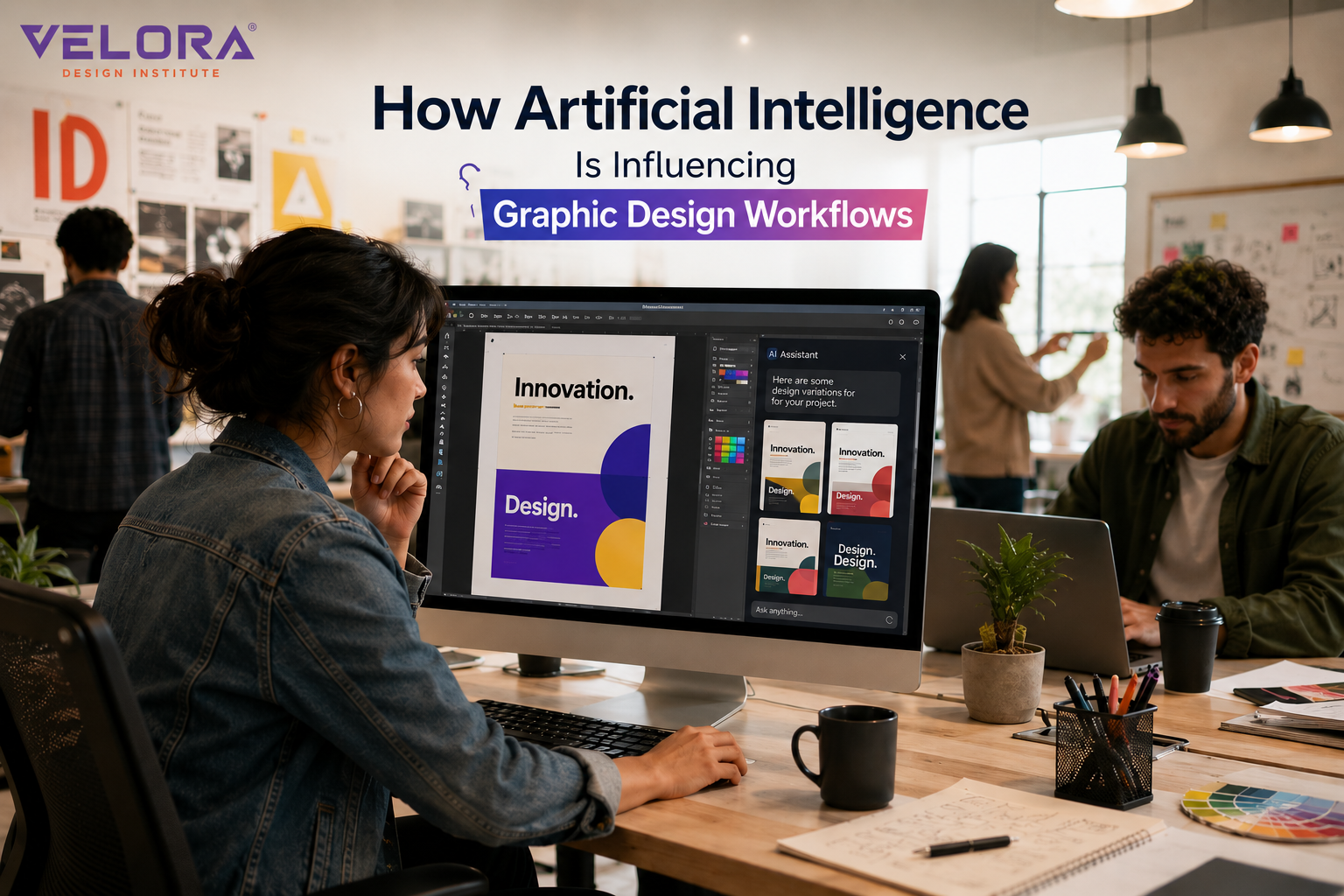
How Artificial Intelligence Is Influencing Graphic Design Workflows
June 11, 2026
How AI in Graphic Design Improves Creativity & Workflow
Explore how AI in graphic design enhances creativity, streamlines workflows, automates tasks, and helps designers work more efficiently.
From hand-drawn artwork to modern digital tools, graphic design has consistently adapted and grown with changing technologies. Today, the development in graphic design is characterized by advancements like artificial intelligence (AI). While AI cannot replace the designer, AI can enhance their capabilities and help the professionals achieve greater efficiencies and allow them to engage with their craft creatively.
With more organizations looking to leverage visual imagery, the role of AI in the field becomes increasingly important in the current graphic design industry. An understanding of the influence of AI on graphic design workflow is vital.
How AI Is Reshaping Graphic Design
AI is an abbreviation for Artificial Intelligence which means computer programs that perform tasks requiring human intelligence. In graphic design, AI-powered tools help designers recognize trends, streamline creative tasks, suggest layout ideas, generate visuals, and even support branding strategies.
With advancements in technology, contemporary AI-driven design platforms have been helpful in aiding designers by creating designs, eliminating background colors, improving image quality, picking colors and giving suggestions on typographic styles.
Faster Design Creation and Productivity
Speed has been one of the greatest benefits offered by AI to the graphic designing process.Graphic design projects typically involve multiple stages, including idea generation, concept sketching, and design refinement. The introduction of AI has greatly reduced the amount of time used in each of these processes.
AI software, for instance, can create logos, graphics for social media, marketing banners, and layouts for websites using user input. The designs can then be customized by graphic designers to meet the demands of the project.
The increased efficiency will enable graphic designers to work on numerous tasks within a limited timeframe. Firms and organizations will also benefit through faster turnaround times. .
Popular Keywords:
- Artificial Intelligence in Graphic Design
- AI Graphic Design Software
- Creative Process in Graphic Design
- Creative Potential in Using AI in Designing
- Creativity Stimulation With the Help of AI Technology
Creativity is often seen as something restricted by AI technology; however, in many cases, the situation turns out to be quite different. Namely, AI-based software is capable of generating new ideas that can be useful for designers when they lack some inspiration.
Some suggestions include:
- Color schemes
- Typography options
- Layout templates
- Visual styles
- Trends and tendencies
Automating Repetitive Design Tasks
A majority of graphic designers often find themselves involved in many mundane tasks like resizing images, layout modification, asset management, and removing image backgrounds. AI automation helps cut down on the manual efforts involved in carrying out such mundane tasks.
Some of the popular AI-based automations in graphic designing include:
- Image background removal
- Image optimization and enhancement
- Object selection
- Image batch resizing
- Content-aware editing
- Smart image cropping
AI-Powered Image Generation
AI-generated images have become one of the most discussed innovations in the creative world today. Now, one can create concept art, illustrations, and visual inspirations through simple text input.
These are most beneficial when developing ideas. Rather than going through tedious hours of developing basic concepts, one can create an inspiration that will be polished to a professional standard.
But ultimately, the success of the design will hinge on human skills. Knowing all about the basics of composition, branding, consumer psychology, and visual hierarchy is important in creating compelling designs.
Improved Personalization in Marketing Design
Current organizations depend a lot on personalized marketing. AI allows designers to develop customized visual designs that target specific consumer groups.
By analyzing customer behavior and preferences, AI can identify the visual elements that are most likely to appeal to a specific audience. In addition, personalized visual design experience has numerous advantages for a company.
Such advantages include high engagement rates and brand awareness.
Better Collaboration Between Designers and Teams
The process of graphic design usually requires collaboration among different parties such as the designer, marketer, client, and content creator. Using an AI-based platform simplifies the process since communication will be easy through real-time feedback, design suggestions, and automation of version control.
This is likely to improve workflow and efficiency in the project.
Challenges and Considerations
Although there are many advantages of AI, designers also need to know about some disadvantages.
The drawbacks are:
- Inability to have emotional intelligence
- Not being able to produce something unique
- Reliance on training data
- Ethical issues related to content ownership
- Need for human evaluation and editing
Even though AI-driven designs can make an excellent starting point, they still need to be modified by designers to fit a company’s requirements.
The Future of Graphic Design with AI
In the years ahead, collaboration between graphic designers and AI-powered tools is expected to become even more common. As AI technology continues to advance, it will support graphic designers in developing concepts, creating content, improving workflows, and enhancing design quality.
AI tools do not substitute graphic designers; they enable designers to become more productive and strategic in their work. Those who manage to incorporate AI technologies into their workflows are expected to be more competitive in the market.
Achieving success will depend on blending technical expertise, creative thinking, and a strong understanding of AI-powered tools.
Conclusion
Introduction
Artificial Intelligence will revolutionize graphic design because of its ability to increase efficiency, creativity, automate processes, and provide personalization in designing projects. Although artificial intelligence will play an important role in providing assistance to graphic artists, creativity will be crucial for outstanding designs. It is recommended for designers to take advantage of these technologies for increased productivity and innovation, while still being able to maintain their artistic vision when creating designs. The skills required to succeed in this industry can be learned at VELORA DESIGN INSTITUTE.
Frequently Asked Questions (FAQs)
1. What are some applications of AI in graphic design?
AI technology is used in graphic design to automate designs, create images, generate layout ideas, enhance photographs, develop brand identity concepts, and increase productivity.
2. Would AI replace graphic designers?
No. AI is only an assistant that helps with work but does not have enough skills or creativity to replace humans in graphic designing.
3. What are some advantages of using AI in graphic design?
AI can help designers work faster, increase productivity, reduce unnecessary actions, and generate new ideas.
4. What are popular AI graphic design tools?
Adobe Firefly, Canva AI, Midjourney, and DALL·E are examples of popular AI technologies applied to graphic design.
5. Should graphic design students use AI tools?
Yes. Learning AI would be beneficial for the future career of any graphic designer.